
Campus roofing is bought by the program, not the roof. A college with a dozen buildings does not replace them in one summer, and the bid that wins is the one that makes the second summer cheaper than the first. In Coeur d'Alene, ID every roof on a campus faces the same winter, from the 60 psf design snow to the ice barrier the city requires at eaves, so the program can be built on a single set of details.
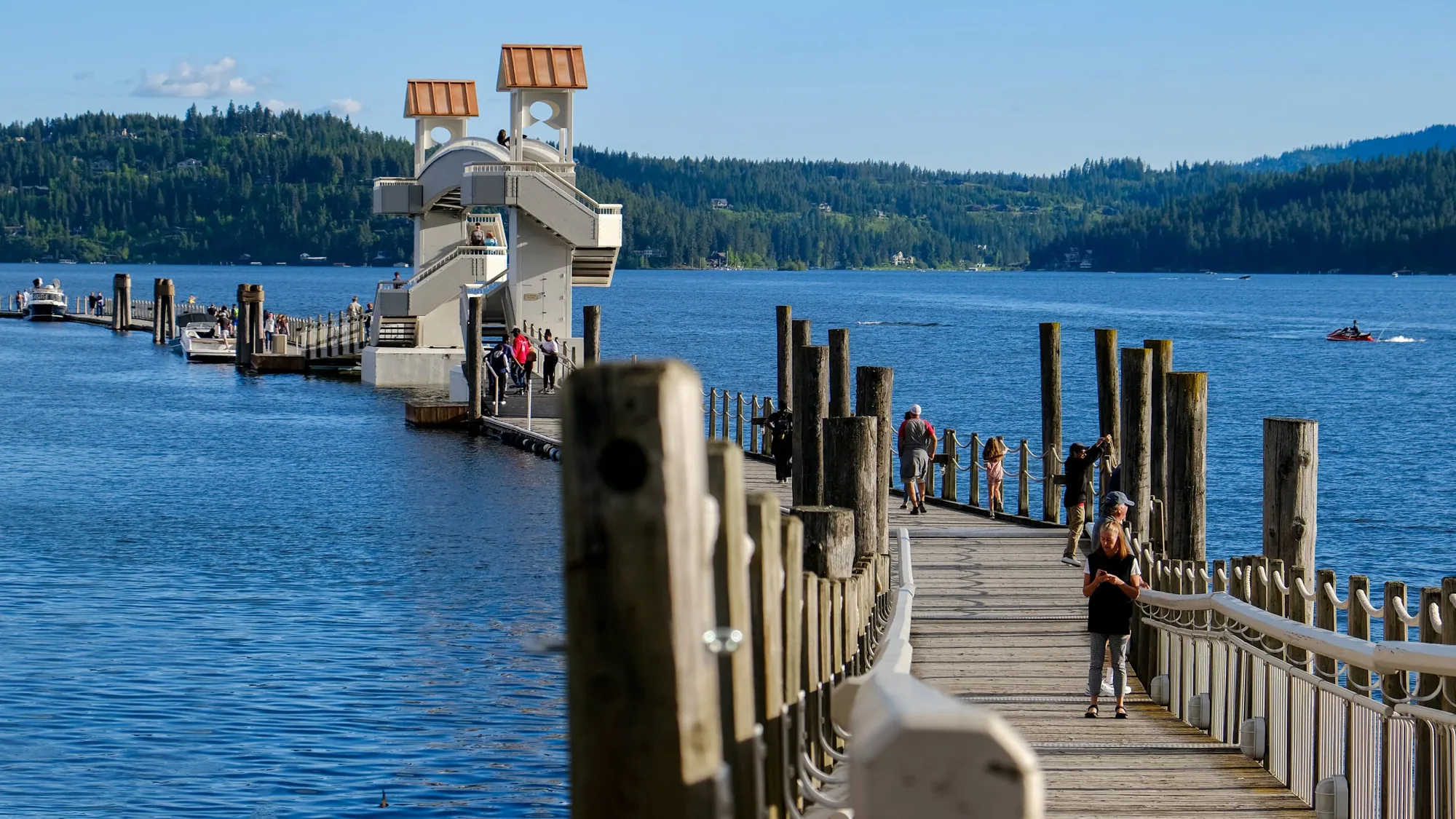
North Idaho College occupies 77 acres on the former Fort Sherman site, with additional sites in Post Falls and Rathdrum among others. A multi-site institution like that buys roofing through a facilities office with a capital plan, a board and a calendar. We write bids to fit all three: a base scope for each building, numbered alternates, and a schedule that follows the academic year.
Schedule and Snow Window: Work Between Terms
The academic calendar sets the roof schedule. Summer is the main window, with shorter openings over winter break and spring break. Anything loud or dusty near a lecture hall, a library or a lab needs to land in those gaps. Residence halls are the exception, since students move out in spring and back in at the end of summer, and the move-in date is a hard stop. A hall that is not dry by then costs the college rooms it has already sold, so we plan each hall to finish well ahead and treat the final week as a buffer for weather, not as working time.
We map the campus by building use and work out a sequence: administration and classroom roofs first, residence halls in the middle of summer, and the roofs over research or special spaces on dates the faculty approves. A phase plan goes to the facilities director before the contract, so a department head knows when to expect a lift on the quad and which door is closed. Where a building holds a lab or a records room, we add the department to the sign-off list for that phase, because the person who owns the space below is the one who can confirm it stayed dry.
What It Costs: Program Pricing and the Second Summer
A campus bid carries more fixed cost than a single-building bid, and less per building if the work is grouped. Mobilization, safety fencing, material staging and a crew on site all spread across more roofs. When a college commits to two or three buildings in one contract, the unit price on the later ones drops.
Condition drives the rest. Some roofs need tear-off because a moisture survey found wet insulation. Others can take a recover over a cover board. We price each building separately and show the cost of grouping, so the facilities office can see how much a second building saves. Edge metal and drains tend to be the lines that vary most between old and newer wings, and they are priced by the foot and by the drain. We also separate the cost of hoisting from the cost of roofing, since a crane or a material lift on a crowded quad is a day of its own and not part of the unit price per square.
Where It Fails First: Additions, Atriums and Roof Drains
College campuses grow in layers. A building from one decade gets an addition in the next, and the roof line between them becomes a step with a flashing, a drift pocket and a drain somewhere nearby. Atriums, skylights and glazed connectors add curbs that can leak after enough freeze-thaw cycles. Interior drains in older wings can clog with debris that settled over many seasons.
Any campus that has grown over time has buildings of mixed ages, and North Idaho College, on the former Fort Sherman site, is a campus where the survey comes before the assumptions. We walk each roof, record the layers, the drains and the details, and rank the buildings by risk. That ranking is the working document for the capital plan and the first thing a facilities committee asks to see. It also lets the college explain a spending order to a board: the roof ranked first has the wet insulation, the roof ranked fifth has a few failed seams, and the roof ranked twelfth can wait on a maintenance contract. Without the ranking, the loudest complaint sets the order, and the loudest complaint is not always the worst roof.
What the Code Sheet Says: Snow and Energy
The statewide 2018 building and energy codes apply, with Seismic Design Category C added by the city sheet. For a campus, that means each reroof may need added insulation under the energy code, and each new insulation depth changes curb and wall flashing heights.
Snow matters more on a campus because people walk under the roofs all winter. A slab of wet snow sliding from a hall roof onto a walkway is a hazard. Our program scope includes a snow-retention review at entries and main paths, with the cost of guards shown as an alternate the college can accept building by building.
Alternates: Where the Capital Plan Gets Flexible
Facilities offices like to control the dials. The list we offer:
- Adding a second or third building to the same contract
- Snow guards over entries and walkways
- Added insulation above the code minimum
- An infrared survey at turnover to set a baseline
- A yearly inspection and drain-clearing visit
- Roof access ladders, hatches and walkway pads for maintenance staff
The survey and the yearly visit are the two that make the next summer's decisions easier. A college that knows the condition of every roof can move the money to where it matters.
Closeout: A Campus Roof Register
Each building leaves the project with a roof file: layers, drains, details, photos and warranty documents. The college keeps those in a register, and the register feeds the next year's roof capital planning. A campus with sites in several towns benefits from a multi-site roof program, and a roof warranty management record keeps the paperwork straight. A small teaching building is planned much like a school roof, while a lab wing borrows the containment steps used on a hospital roof. TPO and modified bitumen are the usual systems. The satellite sites in Post Falls and Rathdrum fold into the same program, and with prairie snow running heavier than the lakeshore, those buildings get a drift review of their own.
Commercial Roofing Questions
Can several campus buildings go in one contract?
Yes, and it usually lowers the unit price on the later buildings. Mobilization and fencing are paid once, and the college can add or drop buildings as alternates.
What about residence halls and the move-in date?
Move-in is a hard stop. We schedule residence halls in the middle of the summer and keep a buffer so the last day of work is well before students return.
How do you protect labs and research space?
With a protection plan agreed with the department: temporary covers, dust control and a dry-in at the end of each day. Some spaces wait for a scheduled break.
Will a new roof need more insulation?
Often, since the 2018 energy code governs a replacement. The added depth raises curbs and wall flashings, and we show it as its own line.
Does the college need a survey first?
A survey ranks the buildings and gives the capital plan a defensible order. It also finds wet insulation that changes the scope from recover to tear-off.