
Twenty-eight miles of scenic road is a line item. Harrison, ID sits on the east shore of Lake Coeur d'Alene, about 28 miles south of Interstate 90 on the Lake Coeur d'Alene Scenic Byway, and every truck, lift and crew day that reaches it makes that drive. The town had 233 residents in 2020 and sits at about 2,274 feet, the same elevation as the Rathdrum Prairie. For a commercial roof, the distance is part of the price, and we put it on the sheet.
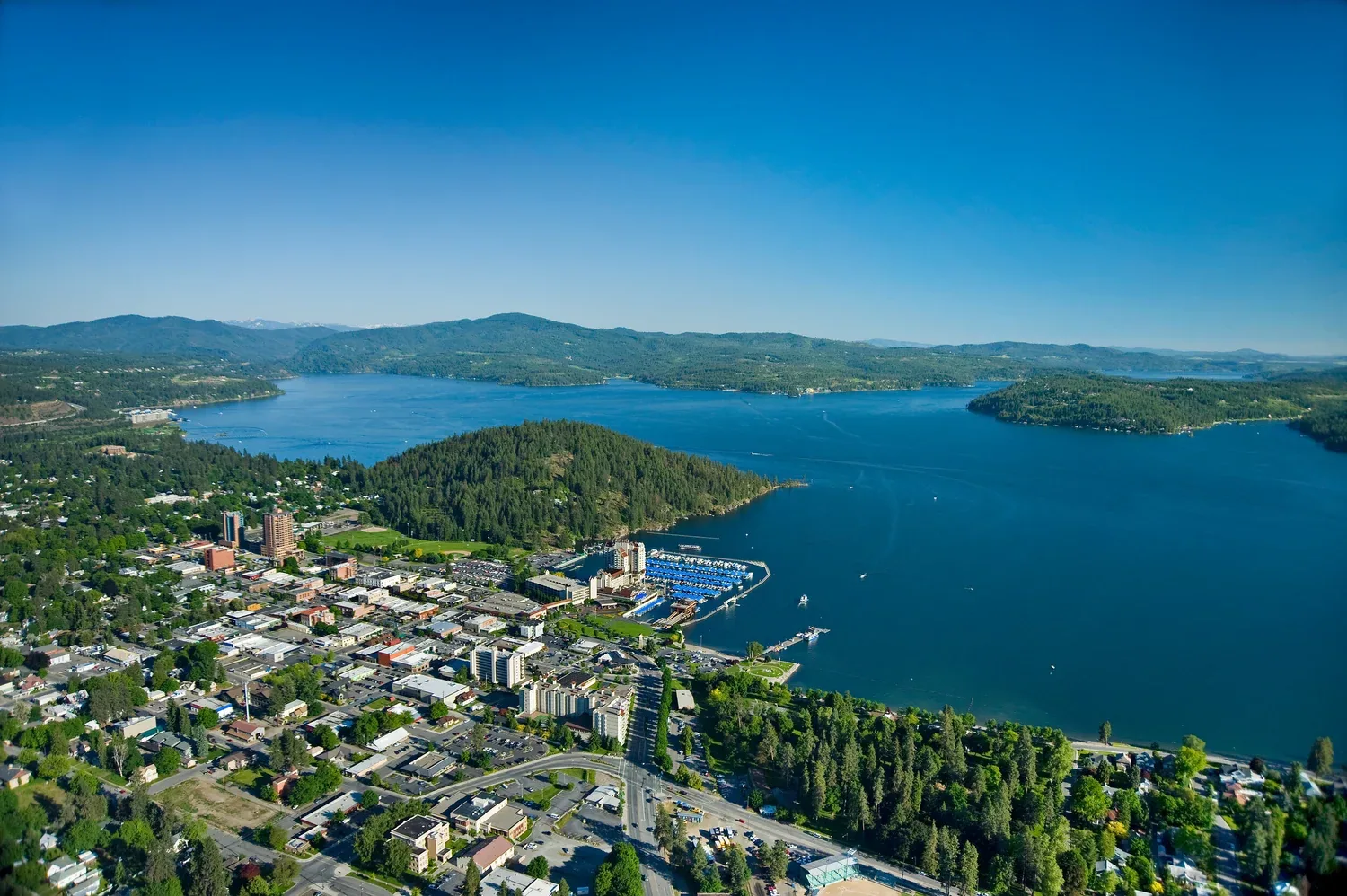
Harrison's own design values are confirmed at permit, so the Coeur d'Alene numbers stand in as a pricing reference until then. A lakeshore building adds moisture to that list. Damp air off the water keeps roofs wet longer, algae and moss gather on shaded slopes, and the wind coming across open water finds the roof edge. We price those details on their own lines.
The Call: Plan the Trip, Then the Roof
A remote job lives or dies on the first delivery. If the membrane arrives and the adhesive does not, the crew sits, and the cost of an idle crew is higher than the cost of a second truck. So we build a checklist before mobilization: every roll, every board, every tube and every fastener counted, plus a day's spare of the materials most likely to run short.
The same planning applies to the crew. We assign enough people to finish a phase in a day, so the roof is dried in before the drive home. A scenic road narrows and slows in winter, and a delay on it moves the whole schedule. We keep a weather buffer, check the forecast the day before and tell the owner the night before whether the crew is coming. Owners on a remote road deserve a straight answer about the schedule, because they cannot drive over to see what is happening, and a call the night before costs us a minute.
What It Costs: Travel, Staging and the Small Roof
For a small roof on a remote road, travel and staging may be the largest line in the bid. A crew, a lift, a dumpster and a delivery each add to it, and a modest roof spreads them over few squares. We list them separately so the owner sees what is trip and what is roof. If two owners in town need work in the same season, we price them together, and each pays less. With a population of 233, a shared trip between neighbors is a practical way to bring the cost down, and we are happy to coordinate it when the owners are willing. The savings come entirely from the shared travel and staging, not from cutting scope.
The roof lines are the usual ones: tear-off or recover, insulation, flashing, edge metal, gutters. A moisture survey costs little and settles the first question. A recover over wet insulation wastes money, and a roof that stays damp near the water is worth testing before anyone commits to one. We say what the survey finds and what it means for the scope.
Where It Fails First: Moss, Algae and the Eave
Shoreline roofs grow things. Moss and algae gather on shaded slopes and north-facing surfaces, hold water against the covering and lift edges as they spread. Gutters fill with debris and pull away under ice. A gutter that holds ice through January pulls its brackets loose and carries water behind the fascia, which is a rot problem that shows up long after the roof looks fine. The eave is where meltwater refreezes, and without ice barrier underlayment the water backs up under the first course of the roof.
Wind off the lake adds to the load. Any lakeshore roof with loose metal or a lifted edge should be checked before the next big wind. We walk the edge first, tighten what is loose and report what needs replacement. A coping cap that rattles when we push on it, a drip edge with nails backing out and a membrane edge that has curled away from the wall are the three signs we look for from the ladder, and each one is a cheap fix before a storm and an expensive one after.
Rebuilding Lessons: What a 1917 Fire Teaches About Roofs
A fire at the Grant Lumber Company in 1917 destroyed about half of Harrison's residential area and half its business district. Whether any present building dates to the rebuild is something a first walk answers, and what any roof is made of comes from the roof. The lesson for a roofer is simpler: a town that lost half its buildings in a day has reason to care about fire rating, and so do we.
Fire safety is part of every roofing scope we write, and in Harrison it gets a longer look. We ask what sits beside and under the roof, what the walls are made of and where the nearest water source is, and we record the answers in the plan. We choose systems with the fire rating the building needs, keep torch work off any roof where it is not required, and run a fire watch when heat is unavoidable. On a site this far from the interstate, avoiding hot work is the cheapest fire protection a roofer can offer.
Alternates: What the Owner Can Add
A Harrison owner usually chooses from this list:
- Ice barrier underlayment at eaves and valleys
- Gutter guards and larger downspouts
- A moss-resistant coating or cleaning visit
- Snow retention above doors and walkways
- More insulation where the energy code asks for it
- A spring inspection with photos
The moss-resistant coating and the spring inspection are the items that matter most near the water. They are cheap against the cost of a second trip. A moss-resistant coating over a sound membrane can stretch the interval between cleanings, and a spring inspection finds winter damage while the crew can still fix it in one visit. Both reduce the number of times a truck has to make the drive.
Closeout: A Roof File and a Cleaning Calendar
The owner receives the roof plan, photos, the warranty and a cleaning calendar for the moss and the gutters. The calendar names the months for each task: gutters after leaf drop, moss treatment in spring, a drain and edge check before the first snow. An owner who keeps to it spends little, and an owner who skips two years pays for a roof that wore out early. Preventive roof maintenance follows that calendar. A roof coating restoration can extend a sound roof near the water, and commercial roof replacement follows when repairs stop paying. Rockford Bay and Medimont are neighboring lake communities we serve, and a lodging owner gets the same guest-aware phasing as on a hotel roof.
Commercial Roofing Questions
Is a remote job much more expensive?
The trip and staging add a fixed cost. We list them apart from the roof, and two owners in town can share them.
Why do lakeshore roofs grow moss?
Damp air and shade hold moisture on the surface. Cleaning and a resistant coating slow it, and sun exposure helps.
Do you use torch-applied systems near homes and shops?
Only where nothing else works. Adhered and welded systems avoid open flame, which matters on a remote road.
What happens if the road is slow in winter?
We carry a weather buffer, confirm the crew the night before and keep a day of spare materials on site.
Does wind off the lake need special edge metal?
The design wind speed on the Coeur d'Alene sheet is 115 mph. We fasten the edge to it and use a heavier detail on exposed corners.