
Hauser is a small city, and small cities have a roof-bid problem: not enough square footage to hide the fixed costs. A crew mobilizes, a lift arrives, a dumpster sits in the lot, and all of it is spread over a few thousand feet of roof. The plain way to price that is to show the fixed costs as lines and let the owner see where the money goes. Hauser was established as a Kootenai County city on May 12, 1981, and had 761 residents in 2020, and a city of that size is likely to hold small commercial roofs.
We write the bid so the fixed cost, the repair and the alternates each have a number. The owner or GC decides what stays in.
The Call: Highway Frontage, Small Footprints
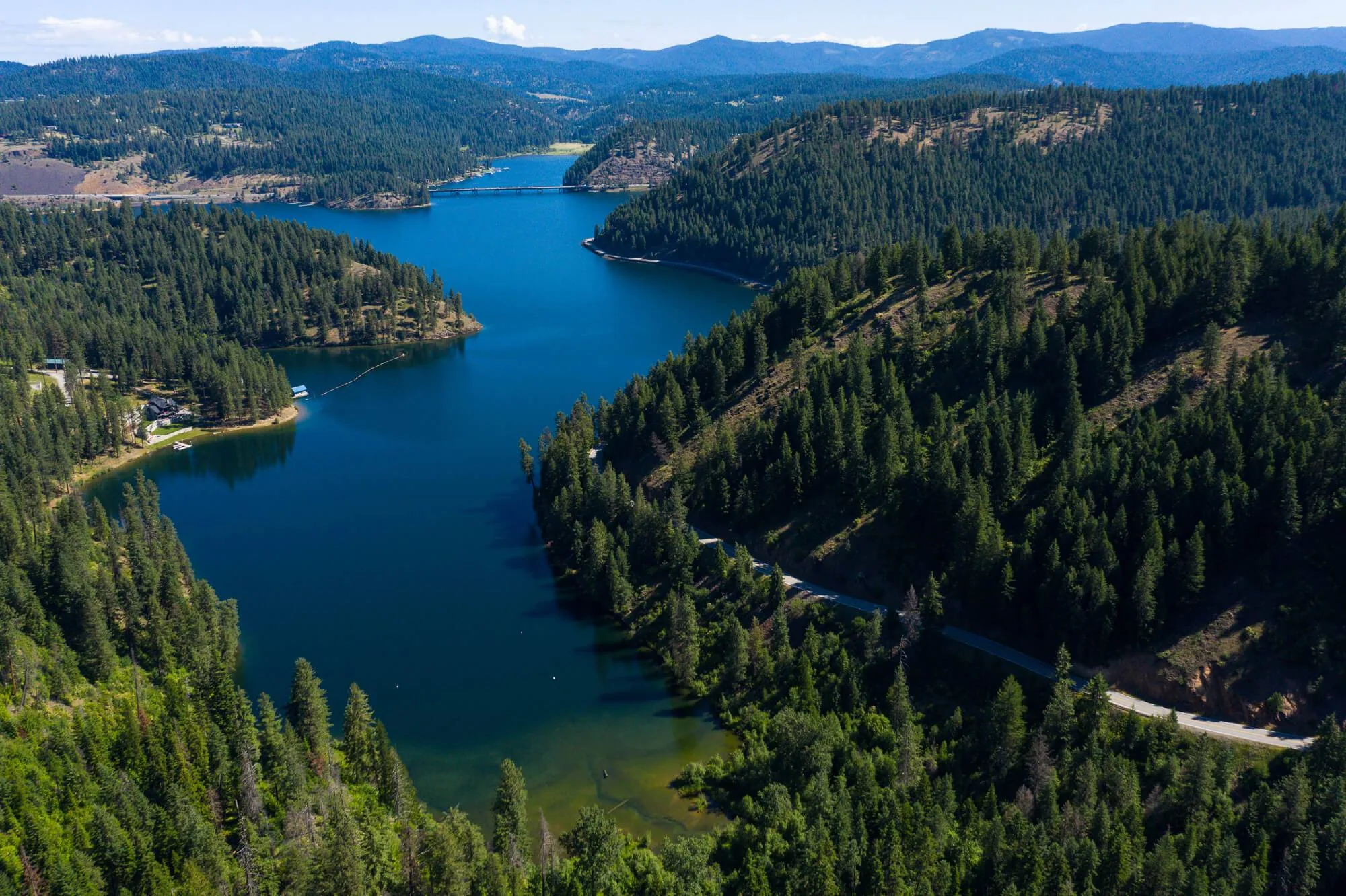
Idaho State Highway 53 runs along the southern edge of the city, linking Rathdrum to the east with the Spokane side to the west, and highway frontage is where a roofer should expect roadside retail, service and trade shops, storage and light commercial buildings. Hauser Lake, just above the city, covers 625 acres, so lakeside buildings are possible too.
The call on these roofs is usually one of three. Repair what leaks. Restore what is sound but weathered. Replace what is wet or worn out. We make that call from a walk and a core, not from the road. A building that looks fine from the highway can have trapped water under a clean membrane, and a building that looks tired can be dry. The bid follows the evidence, and the evidence is photographed and numbered on the plan.
Highway buildings add a wrinkle: traffic. A roof job beside a state highway needs a staging plan that keeps trucks, lifts and dumpsters clear of the shoulder and the driveway, and a crew route that does not cross customer parking. Deliveries arrive in the morning, before the lot fills. The plan goes in the bid as a short line, because a job that blocks a driveway loses the owner more in sales than the roofer saves in time.
What It Costs: Fixed Lines First
A small-roof bid has five lines. Mobilization and access. Tear-off and disposal. Insulation and cover board. Membrane or metal. Flashing, edge and penetrations. The first two are nearly fixed whatever the size. The last three scale with area and detail. Showing them separately explains why a small roof costs more per square foot, and it shows where an owner can save.
The biggest savings come from avoiding tear-off when the roof allows it. A roof recover over a dry, flat existing system skips tear-off and disposal. A coating over a sound metal or membrane roof skips them entirely. Neither works on wet insulation, and cores decide. A pooled bid with a neighbor's roof also lowers the mobilization share. We offer that when two owners are within reach of the same crew.
What the Code Sheet Says: Idaho Code, Local Snow
Hauser answers to the statewide 2018 codes, which a local authority may amend within limits. For pricing we lean on the nearest published reference, the Coeur d'Alene sheet and its snow, wind and ice barrier values.
Hauser lies in Kootenai County near the Rathdrum Prairie, where Post Falls collects about 59 inches of snow in a year. The prairie floor is at about 2,274 feet. We confirm the governing numbers with the building authority at permit and price any difference on its own line. Wet snow is dense, so a drift behind a parapet or rooftop unit is the first place we check on any Hauser roof. Wind builds drifts wherever the ground is open. A drift of a few feet behind a unit sits through several thaw cycles, and meltwater finds any gap in the flashing at the wall. We mark each drift pocket on the plan, measure its distance from the nearest drain and note whether a cricket would move the melt. Where a cricket cannot reach, an added drain or an overflow scupper goes in as a priced alternate, with the drift pocket marked on the same sketch so the owner sees why the line exists.
Where It Fails First: Edges, Lakeside Damp and Drift Pockets
Highway-side roofs fail at the edge. Wind off open ground peels trim and lifts membrane at corners. Lakeside roofs fail at fasteners and metal, where damp air corrodes plain steel. Drift pockets form behind any rise on a flat roof, and the drain nearest the pocket decides whether the melt leaves or stays.
We walk the edge first, check fasteners and trim, then the drains and penetrations. A loose edge goes into edge metal and gutter work, priced by the linear foot. A drain that does not clear goes into drains and scuppers. Neighboring Rathdrum and Post Falls buildings share these failure points, and a single visit can cover several.
Alternates: Choices That Change the Next Winter
Alternates for a Hauser roof are easy to price. Snow guards above an entry or a fuel island. A heavier edge metal with a stronger cleat. A cover board under a membrane where technicians walk. Stainless fasteners on a lakeside metal roof. A larger scupper with heat cable at a drain that ices. A new rooftop unit curb, taller than the old one, to clear drift.
The owner picks. Each line carries a price and the reason, and the ones that pay back fastest are usually the edge and the drain.
Lead time belongs in the choice. Custom edge metal and tapered insulation take days to weeks to arrive, and a bid that ignores them promises a start date it cannot hold. We list the long-lead items at the top of the scope with the date they must be ordered, so the owner can see the true start. Items stocked locally, such as sealant, fasteners and standard flashing, do not hold the schedule. A metal roof retrofit is worth a look for a metal building with sound framing, since it avoids tear-off on a building with few options for staging material. Our preventive maintenance visits keep the alternates from becoming emergencies.
Schedule and Snow Window: Summer or Wait
The roofing season is short. Material and weather set the window, with Coeur d'Alene's January mean near 31 F as the nearby benchmark. Adhesives, welds and coatings need dry, moderate days. A leak in winter gets a temporary seal, and the permanent repair waits.
The way to use the window is to walk in August, price in September and build before the freeze. Owners who start in October compete with everyone else. Owners who start in August choose their dates. Emergency calls are answered around the clock, and a leak that appears in January is documented with photos and moisture readings so the spring repair starts from facts, and the temporary work is billed as its own line, separate from the repair that follows.
Commercial Roofing Questions
Why does a small roof cost more per square foot?
Mobilization, access and disposal do not shrink with the roof. We show them as separate lines.
Can I pool a bid with a neighbor?
Yes, if the specification matches. It spreads the fixed cost.
Is a recover possible on my roof?
Sometimes. The old insulation has to be dry and the roof flat and sound, and cores give the verdict.
Do lakeside roofs need special fasteners?
Stainless or coated fasteners last longer in damp air. We price them as an alternate.
When should I book?
August to September for work before the freeze.